Pericardium 6 Calms the Emotions and Much More!
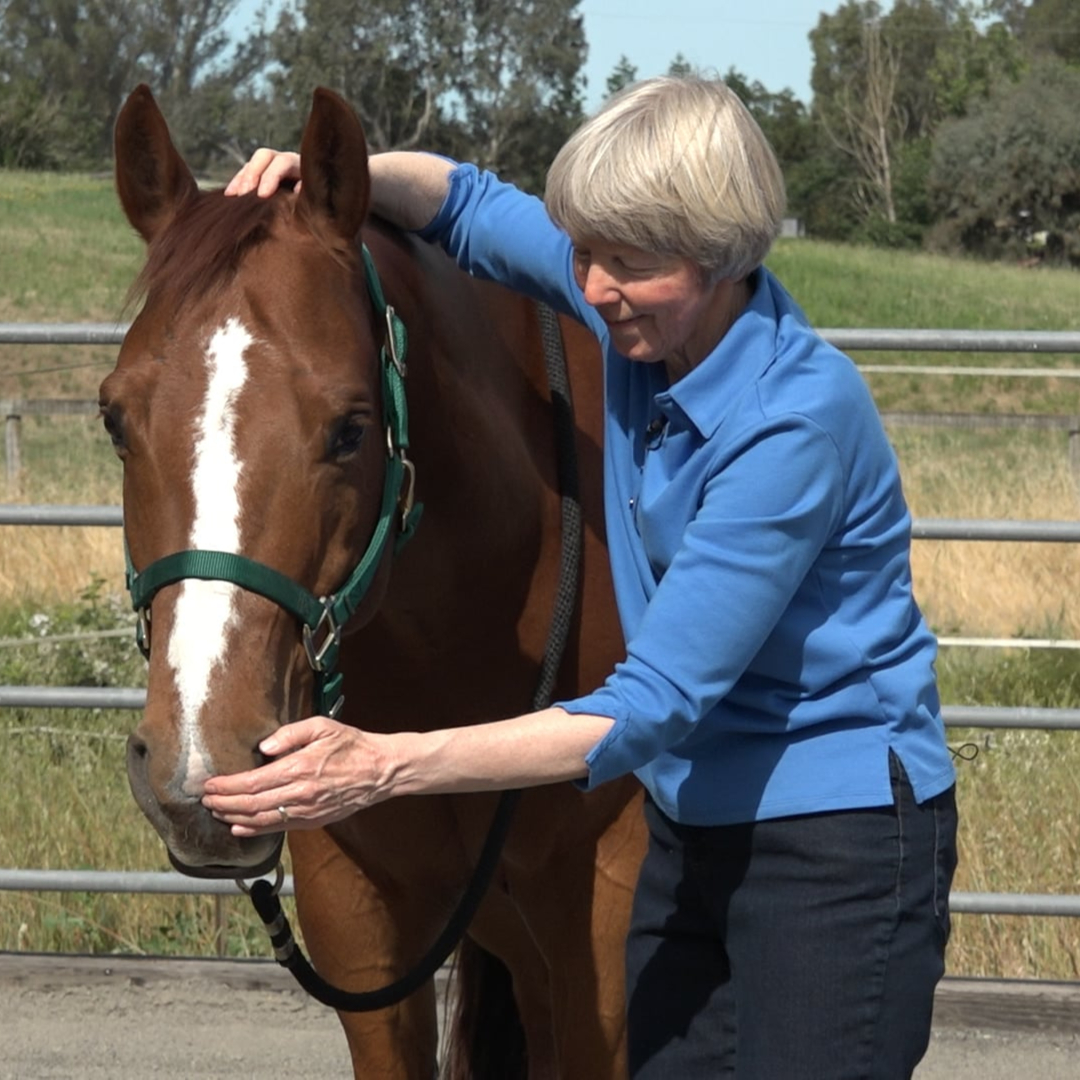
I worked with a student who hadn’t experienced acupressure on herself or with her horse. During our lesson, I taught her how to apply acupressure to a point on her horse’s front leg. Within two minutes, her gelding relaxed into a deep sleep state, lowering his head down towards his knees, blinking his eyes, and taking deep, slow breaths.
As we worked, I explained when this point is activated on a person it eases fear, anxiety, and digestive problems, including seasickness and morning sickness. One way the point is stimulated on a person is by wrist bands that are worn like a watch. My student’s eyes lit up. She told me that while vacationing on a cruise ship she experienced seasickness. The only thing that worked to relieve her nausea was the wristband I described.
Pericardium 6 (PC 6)
The powerful point stimulated by acupressure on the student’s horse and the wrist band on her body is known as Pericardium 6 (PC 6). Its Chinese name is nei guan (pronounced Nay - Gwan), which is translated as “the inner gateway or inner gate.” In Traditional Chinese Medicine (TCM), PC 6 is considered the gateway to the interior of the body including the heart.
As explained in this article, acupressure on PC 6 strongly supports both physical and emotional health in horses. The point’s strong calming effect, however, is what makes it one of the first points I touch during a session. In most cases, acupressure on PC 6 helps the horse relax quite quickly. This puts the horse in a receptive state of mind for additional acupressure, massage, or training lessons.
PC 6 is a Master Point. It Supports the Heart, Lungs, Stomach, and Digestion
In TCM, a master point has a strong influence on the structures and organs of a specific region of the body. PC 6 is the master point for the chest, armpit, and upper abdomen so acupressure on the point relaxes the structures of these areas and supports healthy organ function. This means PC 6 influences the physical health of the heart, lungs, diaphragm, ribs, intercostal tissues, stomach, and digestion.
I’ve used acupressure on PC 6 to help regulate a horse with serious heart arrhythmia issues, open the chest to encourage deep full breathing, ease digestion in horses experiencing mild colic, and help relieve a horse experiencing choke.
Ease Emotional Upset by Calming the Energetic Heart
PC 6 is also used to influence the energetic heart, which, in TCM, is the home of our spirit (known as the shen). This function makes the point one of the strongest points you can use to relax a horse and quiet his mind.
I use acupressure on PC 6 to calm horses who are nervous and have difficulty relaxing. In TCM this emotional imbalance is known as a disturbed shen due to an unsettled heart. The horse may be mildly fearful due to a new situation Or, the horse might be worried about their safety all the time. This type of horse acts as if a tiger is going to leap out from every bush in the area. They feel safer when standing near their horse friends in a familiar environment.
Acupressure on the point also helps horses with stronger emotions such as irritability, frustration, anger or depression. This horse may be restless or agitated. If asked to stand still for any length of time, the horse paws, fusses (bobs his head) and eventually has to move.
Supports Health of the Chest including the Lungs and Ribs
Pericardium 6 also supports the health of the chest. Acupressure can help relieve shallow breathing and coughing. The point can also be used to release muscle tension and soreness in the chest, rib cage and back. The horse with tension in the chest and rib cage may exhibit what is called “cinchy” or “girthy” behavior. This problem occurs when tightening the girth of a saddle or surcingle causes the horse to move with short strides or lameness. The horse may also react to the cinching or a saddle and rider with nipping, biting, or bucking.
Help for the Digestion
Pericardium 6 is used, along with veterinary care, to help relieve many types of problems with the horse’s digestion. It may be useful when the horse experiences a slow stool or constipation, has a partially unformed stool, diarrhea, bloating, gas, or a poor appetite.
The point is used to help a horse who has nausea. This situation can be due to motion sickness (the horse looks unsteady after trailering, sort of like he wants to throw up!) or following anesthesia for veterinary procedures.
Help During Colic
Pericardium 6 is also used in colic situations when the horse has diarrhea, constipation, or regurgitation of digestive material. It’s also useful when a horse experiences choke, a situation where the esophagus (the tube carrying food from the horse’s mouth to his stomach) is partially or fully blocked.
Note: Colic, diarrhea, constipation, regurgitation, and choke are medical emergencies. Call your veterinarian for advice and care first, then apply acupressure as time and safety permits.
Prevent Emotional Upset and Illness
Use acupressure on PC 6 before and after difficult times to help the horse remain in a calm emotional state. It will help relax the muscles of his chest, ribs, and back so his breathing stays deep and full. And relax the muscles and structures of the abdomen so the digestion operates as it should.
PC 6 is a great point to use before and after sessions with the farrier or veterinarian, trailering to a show or moving to a new stable, training or riding sessions, competition, following a stressful event such as a thunderstorm, moving to a new stable, loss of a horse friend, or weaning.
Find the Point – See the Photos
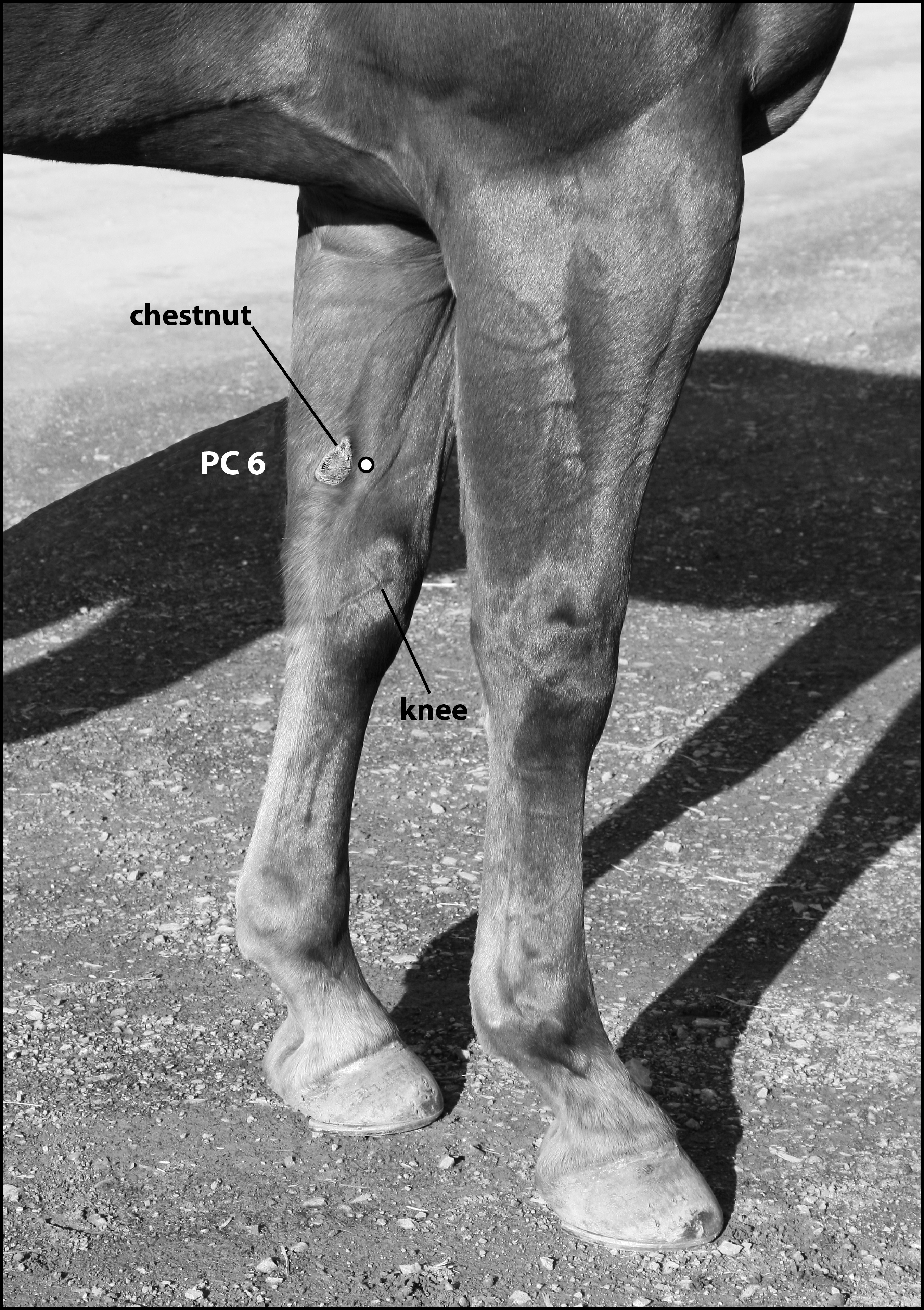
To locate PC 6 on your horse, find the chestnut on the inside of the front leg. This structure is the growth of scaly tissue several inches above the horse’s knee.
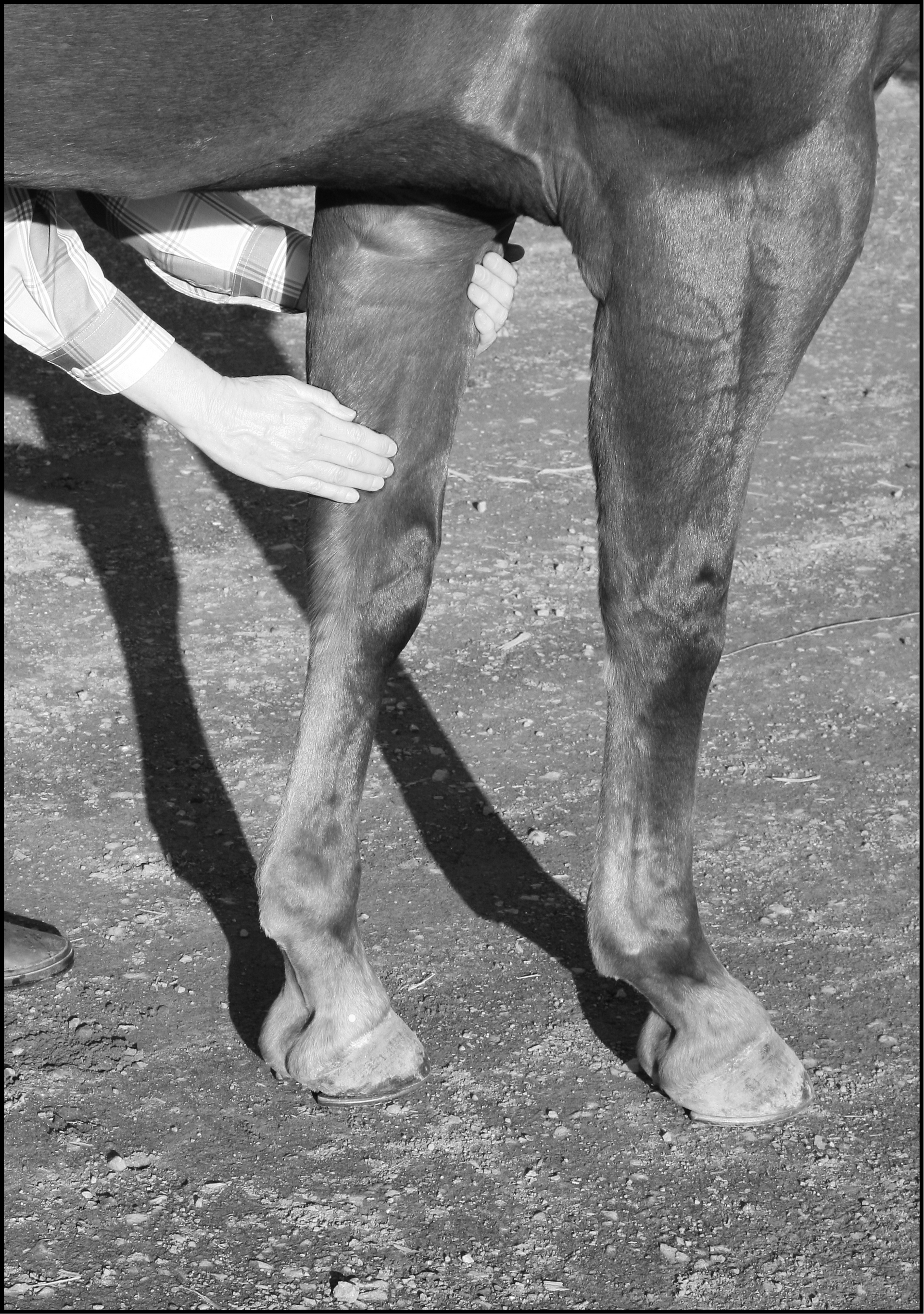
Acupressure on PC 6 is done by gently placing the flat pads of the three middle fingers of one hand on the hair and skin of the horse’s leg just in front of the chestnut. Place your other hand on the outside of the horse’s leg or shoulder as a safety hand to let the horse know where you’re standing. This helps keeps you safe should the horse startle at something.
Apply Gentle Pressure
Hold gentle flat finger pad pressure (two to four ounces) on the point for 1-3 minutes. It helps if you take deep, regular breaths and remain quiet and focused. Limit your talking. Watch your horse for signs of relaxation such as deep breathing, lowered head and neck posture, closing or blinking the eyes and generally becoming inwardly focused (not worried about anything in the outside world around him).
Since the qi, or life force, comes to the surface of the body at the location of an acupressure point, you don’t have to apply much pressure to activate it. My clients are always surprised at how little pressure is needed to create a good response from the horses.
Acupuncture must be very specific because it requires inserting small needles into the area of the point. In contrast, acupressure can be quite general in your finger placement. Placing the finger pads of your hand on the point or putting your palm over the area usually stimulates it enough to get an effect.
Additional Resources
Blog Post
Pericardium 6 (PC 6) Point-finding and Acupressure Session with Diana Thompson and King
In this video, Diana works with a quarter horse gelding named King. She shows students how to locate and work on Pericardium 6 (PC 6) on the inside of the horse’s front leg. Diana’s step-by-step instructions and close-up video footage of King provide an excellent lesson in how to apply acupressure to this powerful point. Note: This video is in Horse Lesson Three of the Comprehensive Online Course
Watch the Video Lesson
Other Video Lessons
Comprehensive Online Course: There are three additional lesson videos in Diana’s Comprehensive Online Course that explain how to use Pericardium 6 with other points with calming functions. One of the videos is Horse Lesson Ten: Point Combination 1 – Calm the Heart and Settle the Shen. During the video, Diana applies acupressure to six points on her horse Handsome. These points, including Pericardium 6, relax the horse’s mind and body quite deeply. Learn more about the Comprehensive Online Course here.
Short Online Course: The video lesson Point Combination 1- Calm the Heart and Settle the Shen, which is described above in the Comprehensive Online Course, is included in Diana’s Short Online Course. Learn more about the Short Online Course here.
Printed Books
Additional information on the uses of Pericardium 6 (PC 6), and other points that calm the horse and support the physical heart, lungs, and rib cage, are found in Diana’s two printed books:
Acupressure Methods for Horses, Calm Your Horse, Support Health, and Improve Performance with 8 Powerful Points. This book is available as a bundle through either the Comprehensive Online Course or the Short Online Course.
Acupressure Point Charts for Horses, An Illustrated Guide to 128 Point Locations and Uses Buy here.
For complete descriptions of Diana’s learning materials, visit Diana's Store.
Copyright © 2026 by Diana Thompson. All rights reserved.